
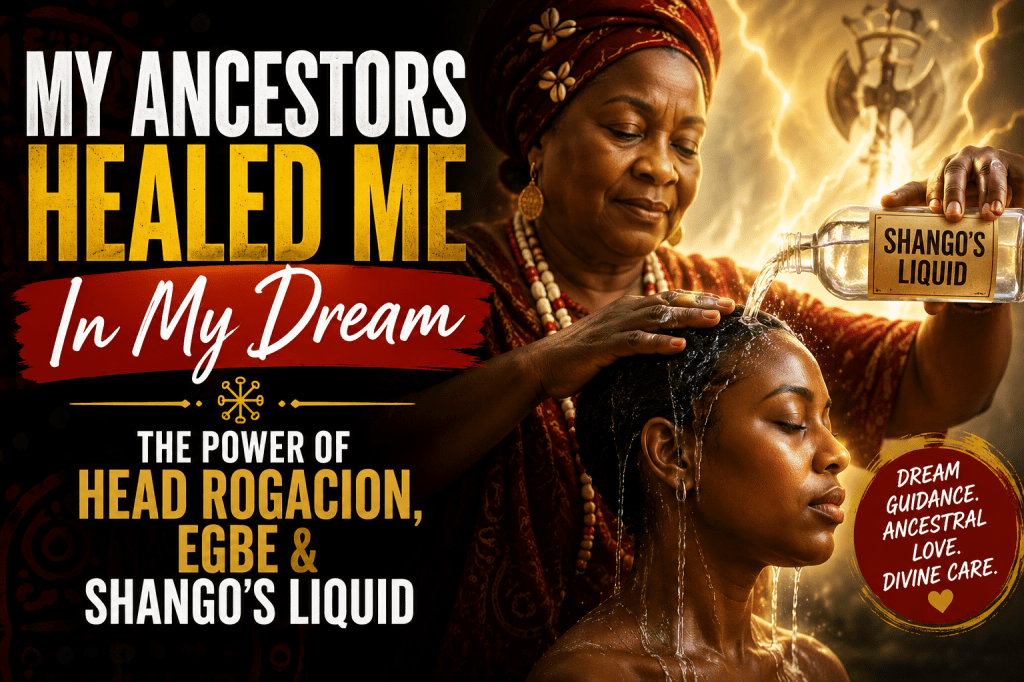
Have you ever woken up from a dream feeling more refreshed than when you went to sleep? What if that dream was actually your ancestors doing spiritual work on you?
A Weekend That Wore Me Down
This past Father’s Day weekend was a tough one — and probably not for the reasons you might think.
Father’s Day is one of those American holidays that can stir up all kinds of feelings. But what hit me hardest this weekend was a confrontation with a relative that did not have anything to do directly with the holiday. I had to stand my ground, and I did. I chose that battle. Not every battle is worth fighting, but this one was.
Here’s the thing about people who want to be right at all costs — they will wear you out trying to win. And even when you hold your position with love and clarity, it still takes something out of you. I should have cleansed myself spiritually, but I did not. I went to bed that night feeling heavy. Drained. Burdened in a way that sleep alone couldn’t fix.
Or so I thought.
The Dream That Changed Everything
What happened next is the reason I’m writing this post.
I fell asleep heavy — and I woke up whole.
In my dream, I was with an African American ancestor. She was a heavyset woman, about 65 years old, with a presence that felt both powerful and deeply loving. She pulled me close and held me in her arms. Then she looked at me and said, “I need to care for you.”
She began rubbing various substances onto my head. Each one had a purpose, and she explained each one to me as she applied it. I wish I could remember all of them — but the one that stayed with me was a cool, clear liquid. She poured it from the center top of my head and let it slowly run down my neck and shoulders.
She showed me the container, which read Shango’s liquid.
I am a child of Shango. If you know, you know.
After that, a younger woman came out with a package full of stuff. She blessed all of my endeavors and spoke positively over my creative pursuits. I in turn blessed and prayed for her as well.
I woke up feeling completely refreshed — clear-headed, peaceful, and grounded. I knew exactly what I believed. I knew exactly what I wanted. And I knew exactly what I was going to do. The heaviness was gone. The confusion? Nowhere to be found.
Confusion cannot live here — thanks to my spirituality.
Why Dreams Matter Spiritually
Dreams are not just random movies your brain plays while you sleep. In many African and African diaspora spiritual traditions — including Lucumí (also called Santería or La Regla de Ocha), Candomblé, Vodou, and Indigenous traditions around the world — dreams are a direct line of communication with the spirit world.
Your ancestors, your Orisha, your guides, and your Egbe (your spiritual community in the spirit realm — more on them in a moment) can all reach you through dreams. This is especially true when you are emotionally open, exhausted, or in a spiritually low state. Your defenses are down, and the veil between worlds becomes thinner.
The fact that this ancestor came to perform a head rogacion on me in a dream is significant on multiple levels:
- It confirms that spiritual work can be received during sleep. You don’t always need to be physically awake for healing to happen.
- The clarity upon waking is the proof. True spiritual work leaves a mark — not in fear or confusion, but in peace and direction.
- Shango’s liquid is a powerful symbol. Shango is the Orisha of lightning, justice, and strength. His energy cuts through fog, burns away what doesn’t belong, and restores power. For his liquid to be poured over the head is an act of divine alignment — restoring clarity and righteous strength.
Have you or someone you know ever experienced healing or guidance through a dream? How did you know it was spiritual and not just “a dream”?
What Is an Egbe?
Before we talk about the head rogacion, let’s make sure everyone understands the term Egbe — because it’s central to this story.
In Yoruba tradition and in the Lucumí faith, Egbe refers to your spiritual community in heaven — the group of souls you agreed to walk alongside before you came into this world. Think of them as your soul family in the spirit realm. They are always with you, even when you can’t see or feel them.
When your Egbe shows up for you — especially in a dream, especially performing care work like this — it is a sign that you are not alone, that you are being held, and that your spiritual family is actively watching over your wellbeing.
They don’t always announce themselves loudly. Sometimes they show up quietly, in the night, in the form of a warm and sturdy woman who simply says, “Let me take care of you.”
What Is a Head Rogacion?
Now let’s talk about what the ancestor was actually doing for me in that dream: a head rogacion (pronounced roh-gah-SYON).
The Meaning Behind the Name
In the Lucumí/Santería faith, rogacion comes from the Spanish word rogar, meaning to pray or to ask. A head rogacion — formally called Rogacion de Cabeza — is a sacred prayer offering made directly to your head, known as your Ori.
In Yoruba and Lucumí belief, your Ori is not just your physical head. It is your personal spirit — the part of you that carries your destiny, your divine path, and your inner wisdom. Your Ori is considered so sacred that it is sometimes honored even before the Orishas themselves.
When life gets heavy — when stress, conflict, grief, confusion, or spiritual interference builds up — your Ori can become overwhelmed. A head rogacion is a way of cooling, cleansing, and refreshing your Ori so it can guide you clearly again.
What Is a Head Rogacion For?
A head rogacion is performed for many reasons, including:
- Mental and emotional exhaustion
- Confusion or lack of direction
- After a conflict or trauma
- Spiritual disconnection or feeling “off”
- To restore peace and clarity
- To strengthen your connection to your destiny and your Orisha
What Is Used in a Head Rogacion?
Traditional ingredients in a head rogacion often include:
- Cocoa butter (ori) — to cool and soothe the head
- Cotton (algodón) — for purity and softness, placed on the crown
- Coconut — for clarity and cooling energy
- Cascarilla (efún) — crushed eggshell powder, used for spiritual protection and purification
- Cool water or specific Orisha-aligned liquids — like the clear, cool liquid in my dream, which the ancestor identified as belonging to Shango
- White cloth — to wrap the head and seal in the energy
- Prayers and invocations — spoken over the head to call in blessings and release what needs to go
Specific ingredients may vary depending on your Orisha, your godparent’s lineage, and what your spiritual needs are at the time. This is not a one-size-fits-all practice — it is deeply personal.
How Is a Head Rogacion Administered?
Traditionally, a head rogacion is performed by a trained godparent (called a madrina or padrino) or a Santero/Santera (a fully initiated priest or priestess in the Lucumí tradition).
The person receiving the rogacion will:
- Sit calmly and quietly — usually on the floor or a low seat, in a spiritually clean space
- Have their head gently cleared and prepared
- Receive the application of cooling substances to the crown of the head
- Be wrapped in white cloth
- Lie down with their head covered and rest — sometimes for hours
Rest is a critical part of the process. Your head needs time to absorb the spiritual work being done.
How Will You Feel Afterward?
Many people report feeling:
- Deeply calm — as if a weight has been lifted
- Mentally clear — confusion gives way to focus and direction
- Emotionally lighter — grief, anger, and heaviness settle
- Spiritually connected — a renewed sense of who you are and what you are here to do
- Sleepy — this is completely normal and even encouraged; rest allows the work to settle
In my case? I felt all of those things — just through a dream. Which tells me my Egbe knew exactly what I needed, even before I could ask.
Spiritual Self-Care Is Not Optional
Whether you practice Lucumí, Candomblé, Vodou, Ifá, or you’re simply someone who lights a candle at your prayer table and talks to God — spiritual cleansing is not a luxury. It is maintenance.
Think about your physical body. You shower. You wash your hair. You brush your teeth. You clean your home. Why? Because life gets messy. Dirt accumulates. Things get stale.
Your spiritual body works the same way.
“Life be lifin’” — as the young folks say. And they are absolutely right. Life will life all over you if you let it. Conflict, loss, disappointment, betrayal, stress — these things leave a residue on your spirit. They cloud your Ori. They slow you down.
That’s why regular spiritual cleansing matters — in whatever form your faith and tradition calls for:
- Egg cleanses to pull out negative energy
- Boveda (ancestor altar) cleansings to strengthen your connection to those who came before you
- Anointed baths and showers with herbs, oils, and prayer
- Head rogaciones to cool and restore your Ori
- Quiet prayer and meditation to reconnect with your inner voice
The key is it is all done with clear intention. What does your spiritual maintenance routine look like? How do you know when it’s time for a deeper cleanse?
To Live a Spiritual Life Is Not Loud
I want to close with something I said to myself when I woke up from that dream — because I think it’s important for anyone on a spiritual path to hear this:
To live a spiritual life is not loud. But it runs deep, and it makes real changes.
People often think spirituality looks like grand gestures, the appearance of spirits, constant rituals, or wearing your faith on the outside for everyone to see. Sometimes you will see entities. But real spiritual living is quiet. It’s the ancestor who shows up in your sleep when you’re too tired to ask for help. It’s the clarity that greets you in the morning after a night of being held by love you couldn’t even see.
I stood my ground this weekend. I didn’t lose myself in that confrontation. I went to bed tired — and I woke up restored.
That is the power of a spiritual life. And I wouldn’t trade it for anything.
Choose your battles carefully. Take care of yourselves, do your spiritual work, and be blessed.

