Following is a profound reclamation of identity, weaving together the threads of magic, history, and the divine feminine that have been frayed by centuries of silence.
My journey back to the Goddess—and ultimately back to myself—began as a whisper in the noise of the modern world. It was a New Age awakening, a sudden, soul-deep recognition that the spiritual landscapes I had been taught were missing their Heart and their Womb. This homecoming was first given voice through my first podcast “Journey to the Goddess”. At the center of this reclamation stands Hekate. To understand her is to understand the very fabric of existence. She is not merely a “witch-goddess” of the periphery; she is the Anima Mundi, the World Soul, the divine personification of life itself in its most potent female form.
The Primordial Spark: From Heka to Hekat
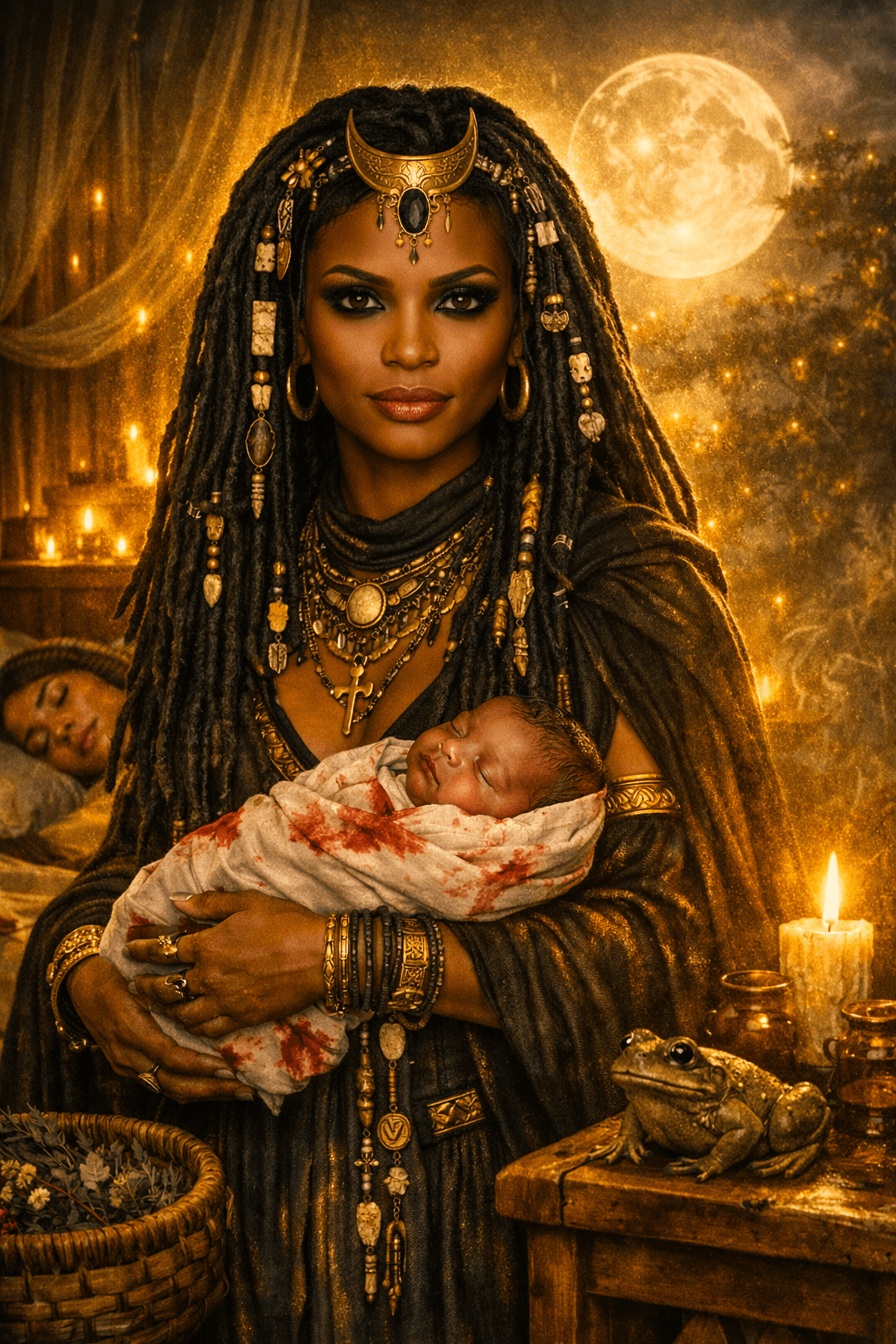
The roots of her power reach deep into the red earth of Ancient Egypt. Before she was the Greek Queen of the Crossroads, she was Heka—the primordial, genderless force of magic that existed before duality, the energy used by the Creator to speak the world into being. But as this energy moved into the realm of form and birth, it took on the feminine mantle of Hekat (Heqet).
As the frog-headed midwife of the cosmos, Hekat was the one who breathed the Ka (the vital life force) into the bodies fashioned by the divine potter. She was the “Breath of Life.” When we look at Hekate, we are seeing the evolution of this Egyptian “Heka”—the transition of raw magical power into a sentient, nurturing, and fierce Goddess who holds the keys to the thresholds of life and death.
The Queen of Heaven in the Lion’s Den
This lineage of power followed the Great Mother into the hearts of the women of Judah. In the shadows of the temple in Jerusalem, despite the rising tides of monotheism, the women knew her. They recognized her as the Queen of Heaven, the celestial sovereign who ensured the rains fell and the children thrived.
Scripture records their defiance in Jeremiah 44. When the prophets demanded they abandon her, the women stood their ground, reminding the men that when they burned incense and baked honey-sweetened cakes in her image, the land was fruitful. They were not “sinning”; they were maintaining the ancient equilibrium, honoring the Goddess who governed the stars and the hearth alike. To them, she was Astarte, she was Ishtar, and she was the precursor to the Hekate who would later be hailed as the “Soteira” (Savior) of the Greek world.
The Great Erasing
The patriarchy tried desperately to erase her. They feared a power that didn’t require their mediation—a Goddess who lived in the “liminal spaces,” the crossroads where human choice meets divine destiny. They attempted to shrink her, turning the cosmic Queen of the Universe into a “hag” or a “demon of the night.” They took the Chaldean Trinity—where Hekate stood as the essential Bridge and “Cosmic Membrane” between the Divine Mind and the Physical World—and they attempted to remove the Bridge entirely, leaving humanity stranded in a world without its Soul.
The Return
But Hekate cannot be erased, for she is the Anima Mundi. She is the incense smoke of the Judean women; she is the “Life-Giving Breath” of the Egyptian midwife; she is the “Power” in the Trinity that allows the universe to feel and breathe.
Connecting with her is a journey of “activating the Ka” within your own soul. She is the one who holds the torches at the crossroads of your life, whispering that you are not just a seeker, but a vessel for the same magic that birthed the stars.
Remember….because if we do not, this same evangelical patriarchy just may destroy everything just for her to have to rebuild again.

